
Does mesotherapy cause redness, burning, or itching? Causes and safe management

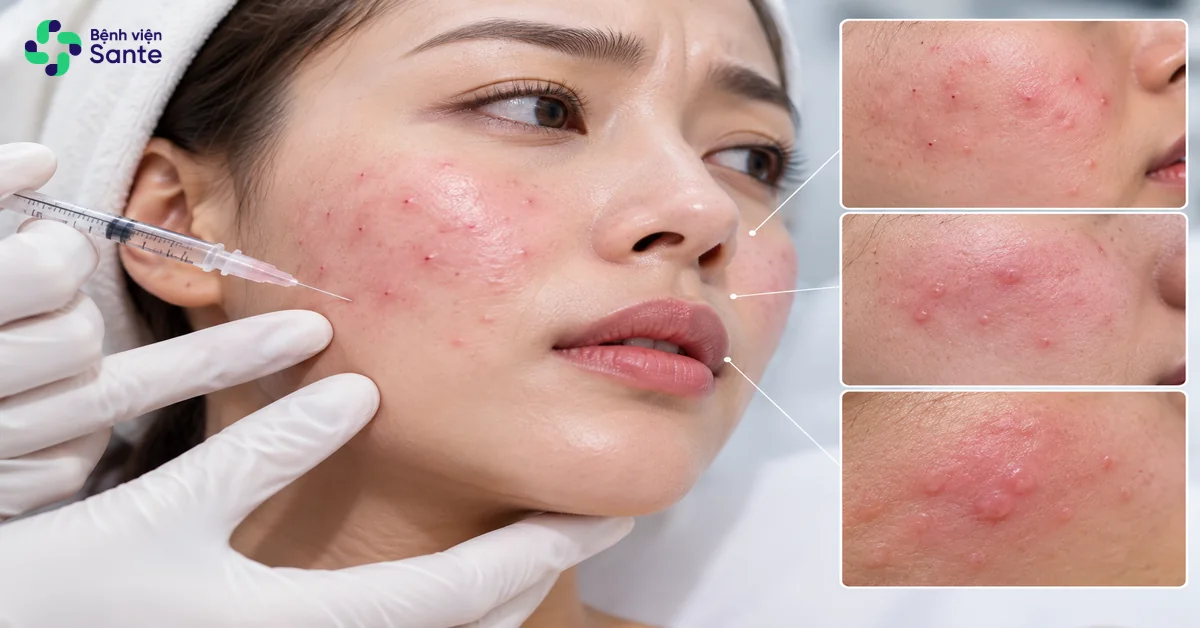
Mesotherapy can cause mild redness, stinging, or transient itching at the injection sites, which usually subsides after 24–72 hours. If swelling and warmth spread, pain worsens, or bumps persist for several days, patients should be evaluated by a dermatologist at Sante Hospital to rule out allergy or infection.
1. How long does redness, burning, and itching last after mesotherapy?
In normal response cases, the stinging sensation and mild redness after mesotherapy usually subside after 24–48 hours, and micro-papules (if injected using the papule technique) will dissolve and gradually flatten within about 2–3 days, depending on the active ingredient and skin area. Conversely, if symptoms do not subside after 72 hours or appear late after several days to weeks, it is no longer a normal recovery response.
For easier self-monitoring at home, individuals should base their assessment on the actual progression of the skin rather than simply waiting out a fixed number of days:
| Degree of progression | Actual skin manifestations | Appropriate course of action |
|---|---|---|
| Normal physiological response (first 24–72 hours) |
Mild redness around the injection site, slight tightness or transient stinging, small localized papules that do not spread and gradually subside day by day. | Gently keep the skin clean, avoid touching with hands or applying cosmetics with strong active ingredients; continue monitoring at home. |
| Close monitoring required (Has not subsided after more than 72 hours) |
Skin remains persistently red and stinging, experiences significant tingling itching, or persistent red papules appear with no sign of subsiding. | Directly contact the medical facility where the procedure was performed so a doctor can evaluate the cause of irritation or reaction to the active ingredients. |
| Need to see a doctor immediately (At any time) |
Spreading warmth and swelling at the injection site, progressively worsening pain, discharge or pus, urticarial rash, fever, or delayed red, firm nodules appearing several weeks later. | Visit a dermatology specialist immediately for proper management based on the underlying cause; seek emergency care immediately if accompanied by difficulty breathing or swelling of the lips or tongue. |
2. Five causes of red, stinging, or itchy skin after mesotherapy injections
Redness, stinging, or itching after mesotherapy injections is usually associated with a combination of factors. Correctly identifying the triggering cause helps target treatment effectively and avoid the misuse of medications.
Mechanical impact of micro-injection needles
The mesotherapy technique creates dozens to hundreds of micro-punctures to deliver nutrients into the superficial dermis. As the needle penetrates the skin, small subcutaneous blood vessels dilate slightly, and local tissue triggers a short-term physiological inflammatory response, causing flushing, mild edema, and a stinging sensation.
The degree of redness and stinging depends on the needle depth, the number of injection points, the technique used (manual injection vs. multi-needle injector), and the sensitivity of individual areas such as around the eyes, cheekbones, or neck.
Irritation or allergy to pre-procedure topical anesthetic cream
This is an often-overlooked cause because many mistake it for a reaction to the mesotherapy injection. Topical anesthetic creams (typically containing lidocaine or prilocaine), if left on longer than the recommended duration, applied to compromised skin, or used in sensitive individuals, can cause flushing, burning, and itching during or immediately after the procedure.
Reactions to active ingredients in mesotherapy products
Mesotherapy products on the market have widely varying formulations, ranging from non-cross-linked hyaluronic acid (HA) to vitamin C, peptides, amino acids, or skin-brightening agents. Some active ingredients with a low pH or high concentration can easily cause stinging and burning at the injection site; in other cases, hypersensitivity reactions occur in response to the main active ingredients, excipients, or preservatives.
Beyond early itchy rashes, using unverified products or those containing ingredients unsuitable for intradermal injection also carries the potential risk of developing persistent inflammatory nodules or late-onset granulomas weeks to months later.
Compromised skin barrier or active inflammation prior to injection
If the individual has a weakened skin barrier, active inflammatory acne flare-ups, contact dermatitis, atopic dermatitis, or has recently undergone chemical peeling or used high-concentration retinoids right before the injection date, the skin will react more strongly than usual to needle trauma.
Procedural technique and aseptic conditions
Pre-injection skin disinfection procedures, the use of disposable needles, proper storage of injection solutions, and the procedure room environment directly determine the safety of mesotherapy. When aseptic technique is not guaranteed, bacteria or foreign agents entering through the micro-puncture sites can cause localized heat, swelling, progressively worsening pain, and even suppuration or soft tissue infection.
3. Safe ways to handle redness, burning, or itching after mesotherapy injections
Proper management within the first 72 hours helps the skin recover smoothly and minimizes the risk of secondary infection or post-inflammatory hyperpigmentation.
Recommended steps to properly soothe the skin
- Keep the injection site clean and dry: During the first few hours, gently clean with physiological saline or clean water strictly according to the performing doctor's instructions.
- Indirect cold compress for mild stinging: A cool pack wrapped in clean gauze may be applied to the skin for a short time to reduce the burning sensation; do not apply ice directly to the injection site.
- Gentle moisturizing and sun protection as directed: Only use mild restorative products whose ingredients have been checked by a doctor, prioritizing physical protection when going outdoors.
- Record symptom progression: Take photos of the skin area at different time intervals and save the name of the injected Meso product to provide to the doctor if an examination is needed.
Habits to strictly avoid
- Do not touch, scratch, or squeeze papules: Manual mechanical manipulation easily disrupts sensitive tissue structures and introduces bacteria into micro-wounds that have not yet closed.
- Do not arbitrarily apply anti-allergy medications, antibiotics, or corticoids: Topical corticosteroids can temporarily reduce redness, but they are prone to causing skin atrophy, acne breakouts, or delaying the detection of a true infection.
- Do not use active treatment ingredients and avoid high temperatures: Temporarily discontinue exfoliating, AHA/BHA, vitamin C, or retinoids; avoid saunas, excessively hot showers, or strenuous activities that cause heavy sweating during the first 48 hours.
Contact a medical facility immediately if the injection site develops expanding redness and swelling, throbbing pain, localized warmth, cloudy discharge/pus, fever, or hard nodules after several weeks. If shortness of breath, hoarseness, dizziness, or swelling of the lips or eyelids occurs, call emergency services (115) or go to the nearest emergency room immediately.
4. How to minimize the risk of adverse reactions after mesotherapy injections?
Safety in mesotherapy injections is determined from the pre-procedure screening stage through the post-injection monitoring protocol:
- Thorough examination and comprehensive medical history taking: Clearly discuss with the doctor any history of allergy to local anesthetics, cosmetic allergies, chronic dermatological conditions, and any medications or specialized treatment products currently in use.
- Clearly check the product's origin: Mesotherapy products must have a transparent origin, remain fully sealed, and be approved for use in medical micro-injection techniques, avoiding choices based on cheap advertising.
- Performed at a licensed medical facility: The procedure must be directly examined, indicated, and performed by a licensed physician under standard sterile conditions.
- Comply with follow-up visits and post-procedure care: Follow proper hygiene and skin protection instructions, and immediately notify your treating doctor if any unexpected symptoms occur. You can also refer to common skincare mistakes to avoid inadvertently weakening the skin barrier both before and after cosmetic procedures.
5. Safe skin examination and treatment at Sante Hospital
Accurately differentiating between transient post-injection reactions and complications such as allergies, infections, or granulomas requires dermatological expertise and direct clinical evaluation. Self-diagnosing at home or treating based on word-of-mouth advice can prolong skin damage and make recovery more difficult.
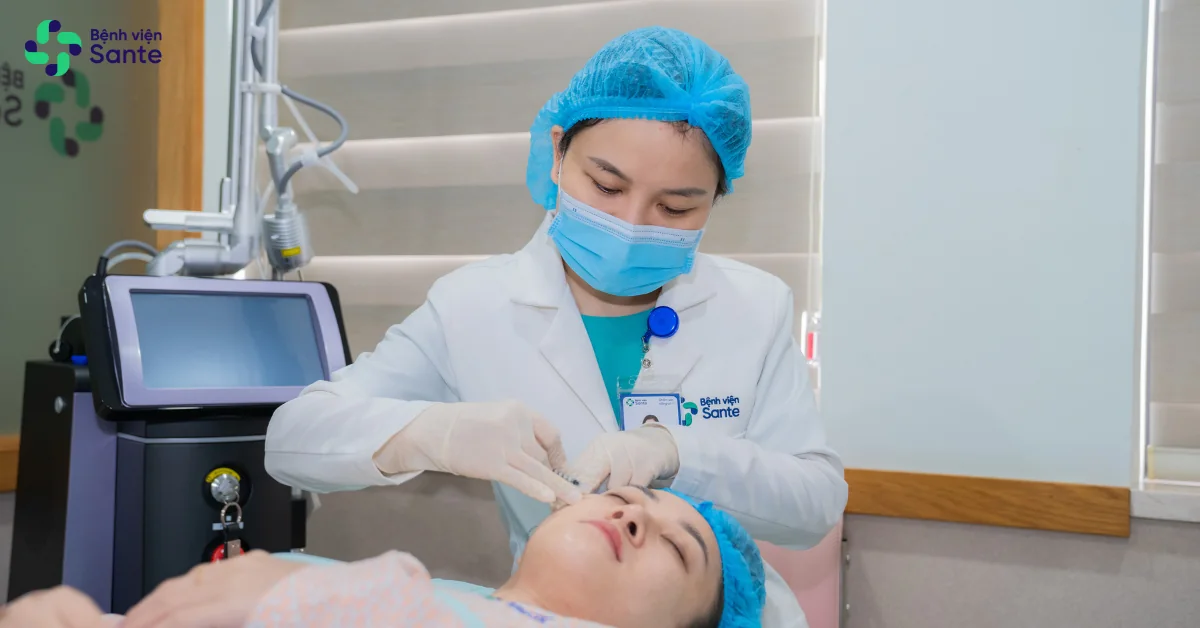
At the Department of Plastic Surgery and Dermatology of Sante Hospital, patients receive direct skin examinations, allergy history assessments, and personalized skin care or recovery regimens tailored to their individual conditions in a sterile hospital environment by specialized certified physicians, including Specialist Doctor II Duong Thi Le Trang and Specialist Doctor I Tran Gia Minh Hiep. For sensitive skin or concurrent pigmentation issues, the doctors coordinate evaluations with intensive dermatological treatment protocols to maximally protect the skin's biological barrier.
6. Frequently asked questions about redness, burning, and itching after mesotherapy
1. Are skin redness and small bumps after mesotherapy a cause for concern?
It is not too concerning if the redness is mild, the bumps are localized at the injection sites, and they gradually subside within 24–72 hours without increasing pain or discharge. If the redness spreads, becomes swollen and warm, or does not resolve after 3 days, the patient should be evaluated by a dermatologist.
2. Is itching after mesotherapy definitely an allergic reaction?
Not necessarily. Mild, transient itching may be due to mechanical irritation from the needle, numbing cream, or a local tissue recovery response. However, if there is severe itching accompanied by hives, a widespread rash, or swelling, it is a suspected sign of an allergy that requires prompt medical evaluation.
3. How long after Meso injection can I wash my face and apply moisturizer?
During the first 6–12 hours after the injection, avoid washing your face with foaming cleansers or rubbing vigorously; you may gently wipe with normal saline as directed by your doctor. After 24 hours, once the micro-punctures have closed, you can gently wash your face and apply a mild recovery cream.
4. What does it signify if hard lumps or red, itchy bumps reappear 1–2 weeks after Meso injection?
Red, firm, or itchy papules that appear late—after several days to weeks—may be associated with a delayed hypersensitivity reaction, granuloma caused by the injected ingredients, or a delayed infection. Do not attempt to prick or squeeze them at home; instead, visit a dermatologist for proper management.
5. When should you see a doctor immediately after Meso injections?
You need to seek immediate medical attention if the skin shows spreading swelling and warmth, progressively worsening pain, pus discharge, generalized rash, or fever. In case of shortness of breath, dizziness, or swelling of the lips or tongue, go to the nearest emergency room immediately.
SAFE EXAMINATION AND CONSULTATION WITH SANTE DERMATOLOGISTS
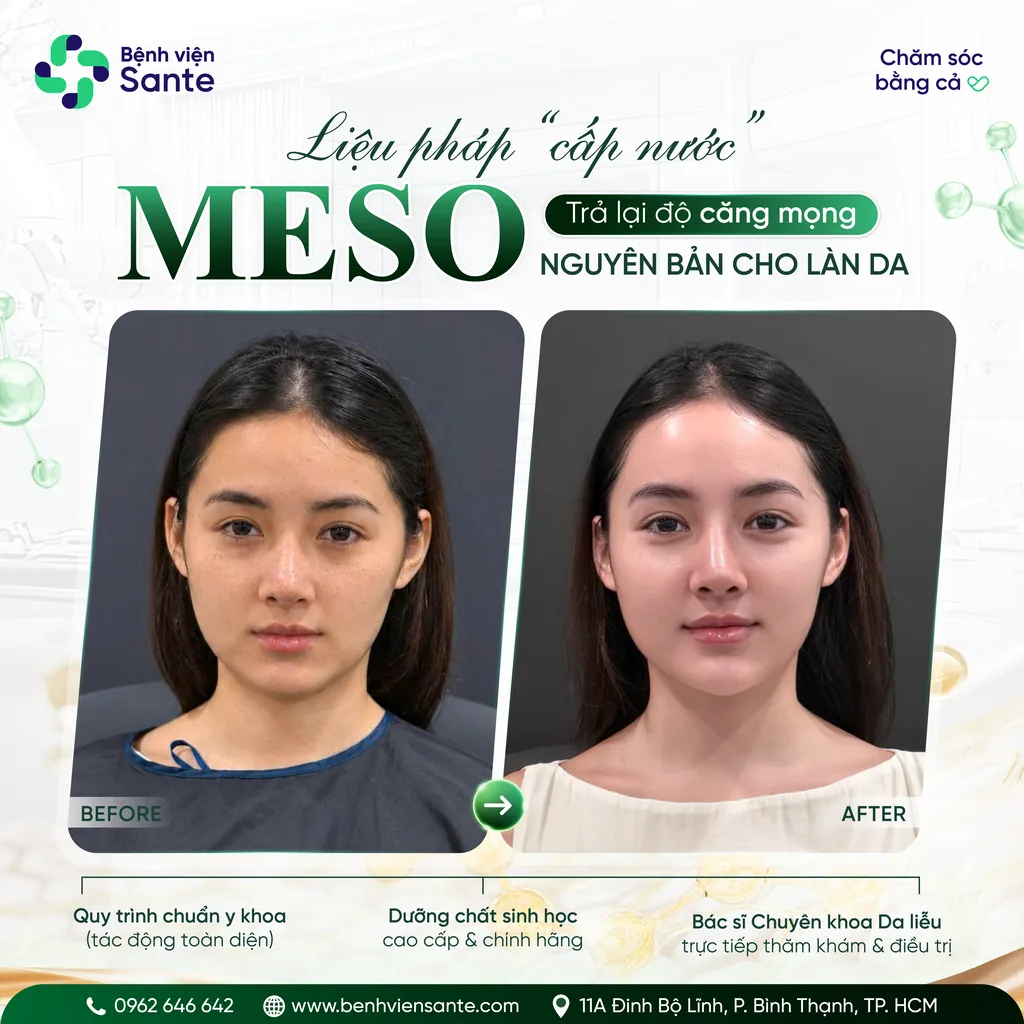
If you are experiencing prolonged redness and burning after a procedure or need consultation on medical-standard skin rejuvenation, please book an appointment for a direct evaluation by a Dermatologist at Sante Hospital.