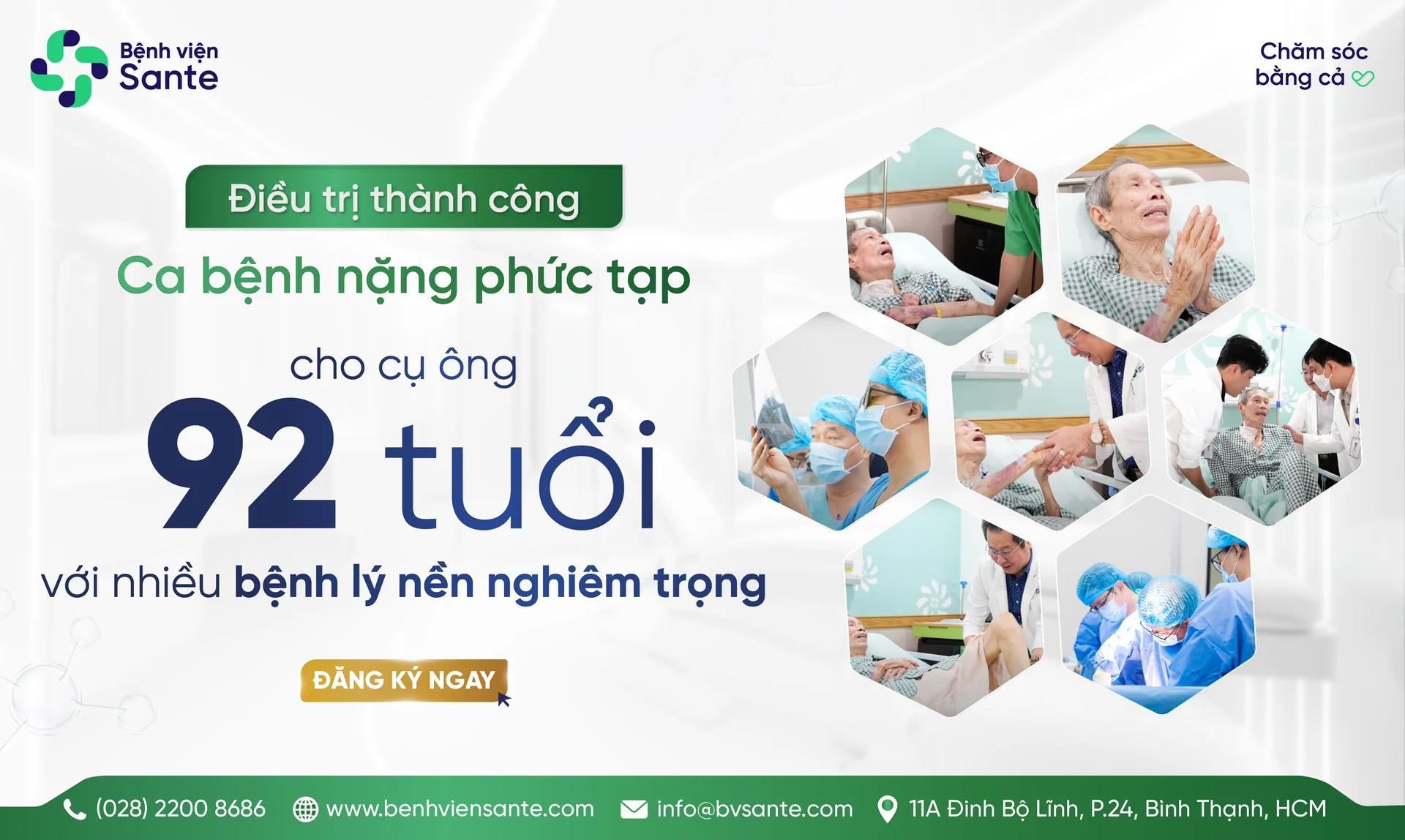
SANTE HOSPITAL SUCCESSFULLY TREATS A HIGHLY COMPLEX CRITICAL CASE IN A 92-YEAR-OLD PATIENT WITH MULTIPLE SEVERE COMORBIDITIES

A 92-year-old male patient with an intertrochanteric femoral fracture and multiple complex underlying comorbidities was successfully operated on at Sante Hospital.
1. Biological mechanism & Early warning signs
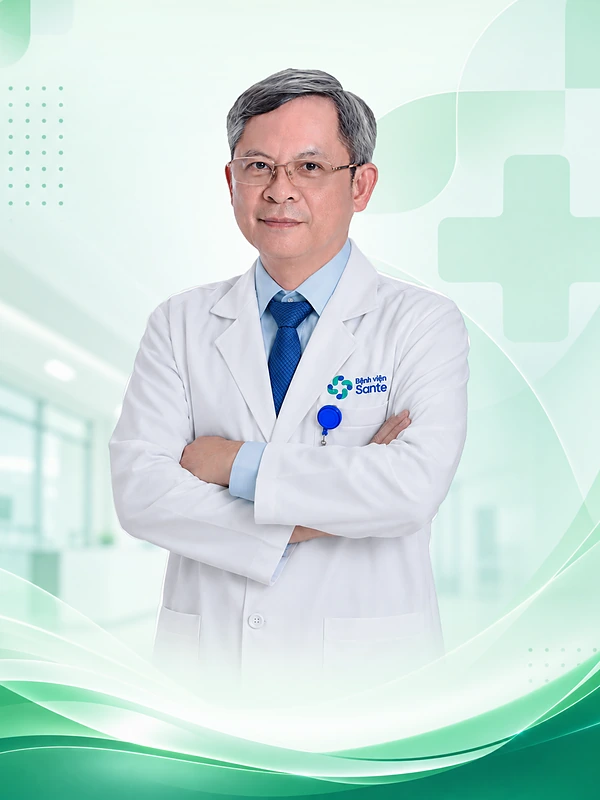
According to MSc, Specialist Doctor II Trinh Duc Tho, Medical Director, Senior Physician specializing in Orthopedics and Traumatology shared:” The patient was admitted due to a femoral neck fracture from a self-fall about 1 week prior, having previously walked with the assistance of relatives. Patient's condition on admission: Hypertension, severe hyponatremia, poor nutrition, cachectic state assessed as severe malnutrition, severe cachexia with skin and bones (BMI # 15 kg/m2). Severe anemia, low blood protein and albumin (due to poor nutrition), severe pneumonia (colorectal cancer with lung metastases not ruled out) with contrast-enhanced chest CT showing Bilateral pneumonia and severe pulmonary fibrosis, brain CT scan : Senile cerebral atrophy, monitored for hydrocephalus. Clinical examination in the first few days showed the patient opening eyes, but with slow interaction, whispering and slurred speech, somnolence, and severe pain in the fracture site making movement difficult; prolonged bed rest posed a risk of worsening Pneumonia and a high risk of leading to acute respiratory failure, urinary tract infection, and pressure ulcers.
The issue is that although the patient is indicated for surgery to address a femoral neck fracture – an emergency condition in the elderly – the patient's condition upon admission was not suitable for surgery. This requires us to have an active medical treatment strategy and close coordination among specialties to adjust disorders and improve the patient's condition before surgery.
Sante Hospital has established a multidisciplinary team in collaboration with major hospitals to develop a comprehensive treatment strategy, focusing on improving blood pressure, serum sodium, nutrition, and pneumonia. After one week, the patient's health has significantly improved, qualifying them for surgery.
Under the guidance of Dr. Tang Ha Nam Anh and the orthopedic trauma team, the surgery was performed according to the criteria of minimally invasive techniques and thorough preparation, from the surgical method to risk prevention.
We prepared very thoroughly, from selecting the appropriate surgical method, calculating the anesthetic dosage, to anticipating and preventing risks during and after surgery. All of these steps were discussed and meticulously planned by the hospital leadership, relevant department heads, and specialized physicians of the hospital before proceeding.
The surgery was successful, the elderly man recovered quickly, able to sit up, eat, and communicate with his family. The surgery proceeded very smoothly according to our plan. The surgery time was shortened, the injury in the fractured area gradually healed, and the patient became much healthier. After the surgery, the patient could sit up, eat, and talk with family and medical staff. This is a successful outcome for our team, as it not only saved the patient's life but also significantly improved his quality of life.
The most important lesson we have learned is the significance of multidisciplinary collaboration in assessing and managing complex clinical cases. The contribution of each specialty in individualizing treatment is crucial, from medical adjustments for patients, examining treatment according to comprehensive care criteria, evaluating diagnoses through regular examinations, and providing timely treatment orders to performing surgeries.
Moreover, the trust and companionship of the patient's family is an indispensable factor. Family members fully trust and cooperate with the medical team, which gives us additional motivation and focus to overcome difficulties.
Ultimately, regardless of the severity of the patient's critical condition, we consistently emphasize comprehensive evaluation and never overlook any opportunity to save the patient's life.
This is a testament to the crucial role of multidisciplinary coordination in managing complex cases, along with the trust of the patient's family, helping the medical team overcome challenges to achieve the best outcomes.
Department of Orthopedics & Traumatology, Sante Hospital specializing in the examination and treatment of musculoskeletal conditions, ligaments, cartilage, and surrounding soft tissues. Joint replacement surgery is routinely performed at Sante, with many patients recovering quickly and walking after 24h.
2. Diagnostic methods & specialized treatment protocols
⏰ Monday – Saturday: Morning 7:30 AM – 12:00 PM, Afternoon 1:30 PM – 5:00 PM | 24/7 Emergency: ((+84) 937 389 539)
💳 Full nationwide health insurance coverage & Direct billing for private insurance accepted
Proactively protect your health with our experienced specialist doctors and advanced medical equipment.
📞 BOOK AN APPOINTMENT NOW: (+84) 28 2200 8686 – (+84) 901 295 399
⏰ Monday – Saturday: Morning 7:30 AM – 12:00 PM, Afternoon 1:30 PM – 5:00 PM | 24/7 Emergency: ((+84) 937 389 539)
💳 Full nationwide health insurance coverage & Direct billing for private insurance accepted