
Persistent hoarseness:
Causes, warning signs, and when to see a doctor

Persistent hoarseness after speaking a lot or a common cold usually improves within a few days of rest. However, if your voice remains hoarse, raspy, or breathy for more than 2 weeks despite keeping warm and resting your voice, it may signal an issue with the vocal cords or larynx requiring specialist evaluation. This article helps you identify common causes, early warning signs, and the diagnostic process at ENT Department – Sante Hospital.

Sante Hospital Expert Perspective: Many patients come for evaluation after months of hoarseness, having previously used lozenges or bought antibiotics on their own. While this may temporarily soothe symptoms, it can mask the underlying cause. For hoarseness lasting over 2 weeks, an in-clinic laryngeal endoscopy takes only a few minutes and allows the doctor to directly inspect the vocal cords and guide appropriate treatment from the start.
1. What is persistent hoarseness?
Hoarseness is an abnormal change in voice quality: the voice becomes rough, raspy, weak, breathy, deeper, or struggles to hit high notes. It is important to understand that hoarseness is a symptom rather than a standalone disease. Behind a hoarse voice may be simple laryngitis, improper vocal habits, or sometimes a structural lesion that requires early detection.
How is the voice produced?
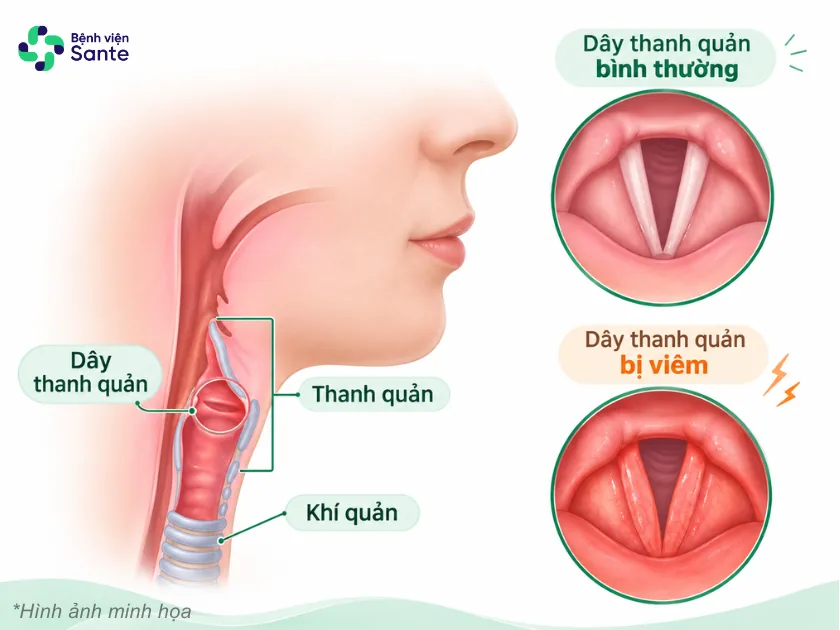
The larynx is located at the front of the neck and houses two vocal cords. When we breathe, the vocal cords open to let air enter the lungs. When we speak, they close and vibrate from the airflow coming from the lungs to produce sound, which is then resonated by the throat, mouth, and nose into each person's unique voice.
Therefore, anything that causes vocal cord swelling, surface lesions, or incomplete closure can alter vocal cord vibration and result in hoarseness.
What is considered “persistent” hoarseness?
Hoarseness caused by a common cold, acute pharyngitis, or voice overuse typically improves within a few days to about 1 week with rest. Hoarseness that does not improve after about 2 weeks, or resolves only to recur repeatedly, is considered persistent hoarseness. At this point, patients should see an ENT specialist to find the exact cause rather than waiting for spontaneous recovery.
2. Causes of persistent hoarseness
Persistent hoarseness may stem from vocal habits, laryngeal disorders, or conditions affecting adjacent organs. Causes can be grouped into three main categories below.
Common causes
- Voice overuse or misuse: Speaking loudly, shouting, or talking continuously for hours. Over time, repeated vocal cord friction can lead to nodules, polyps, or cysts.
- Chronic laryngitis: Often develops after repeated episodes of acute and chronic laryngitis that were not fully resolved.
- Rhinosinusitis: Chronic postnasal drip irritates the larynx, causing frequent throat clearing and hoarseness, commonly seen in patients with allergic rhinosinusitis.
- Smoking, alcohol consumption, and dusty or chemical environments: These irritants cause chronic dryness and inflammation of the laryngeal mucosa.
- Medication side effects: Such as inhaled corticosteroid asthma sprays if the patient does not rinse their mouth afterward.
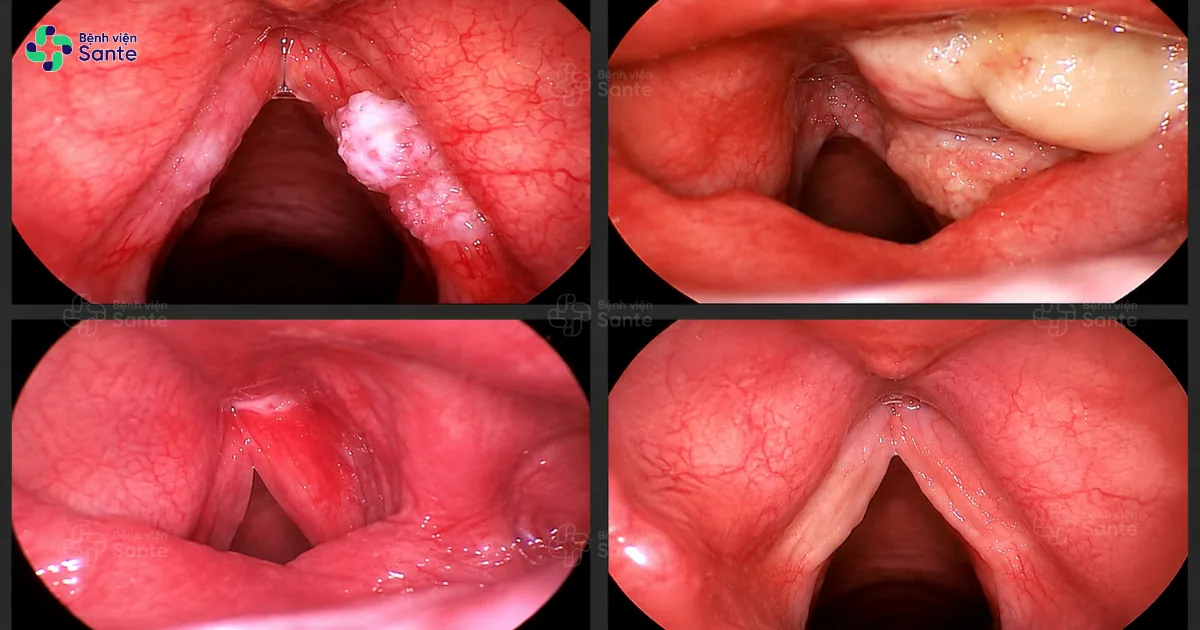
Laryngopharyngeal reflux (LPR): an easily overlooked cause
In some individuals, stomach acid and digestive enzymes reflux up into the pharynx and larynx. Because the laryngeal mucosa is much more delicate than the esophagus, even small amounts of reflux can irritate the vocal cords and cause hoarseness, often most noticeable in the morning.
Patients often feel a lump or phlegm-like sensation in the throat, clear their throat frequently, and have a persistent dry cough. Notably, many cases lack classic heartburn or acid regurgitation, making LPR easy to miss if treated only as routine pharyngitis.

Causes requiring prompt evaluation
- Vocal cord paralysis or paresis: Can occur after neck or chest surgery (such as thyroid surgery), endotracheal intubation, or injury to nerves supplying the larynx.
- Vocal cord leukoplakia: White patches on the vocal cord surface that require close monitoring, as some cases carry a risk of abnormal progression.
- Tumors of the larynx or hypopharynx: Less common, yet a critical reason never to ignore persistent hoarseness, especially in long-term smokers.
- Systemic conditions: Such as hypothyroidism or certain neuromuscular disorders, which can also alter voice quality.
Based solely on how the voice feels, it is very difficult to distinguish among these causes. That is why clinical examination and laryngeal endoscopy are essential for persistent hoarseness.
3. Who is at higher risk of persistent hoarseness?
Anyone can experience hoarseness, but certain groups face higher risk due to occupational voice demands or health conditions:
- Heavy voice users: Teachers, lecturers, MCs, singers, call-center staff, sales representatives, and sports coaches—whose vocal cords work continuously for hours each day, often in noisy settings.
- Smokers or people exposed to secondhand smoke: Airway and vocal cord mucosa undergo chronic irritation.
- Individuals with gastroesophageal reflux disease (GERD) or laryngopharyngeal reflux (LPR).
- Older adults: As vocal cord tissues naturally thin and lose elasticity with age.
- Patients who recently underwent neck or chest surgery or endotracheal intubation.
- Young children: Habitual crying or shouting during play can also strain and injure the vocal cords.
If you belong to any of these groups, pay closer attention to voice changes and do not delay medical evaluation.
4. Is persistent hoarseness dangerous? Red-flag signs for prompt evaluation
Most cases of hoarseness have benign causes and improve with proper management. Still, persistent hoarseness must be evaluated so conditions requiring early intervention are not missed. Distinguishing routine hoarseness from warning signs helps you act promptly.
Routine hoarseness
Routine hoarseness typically appears after a cold, sore throat, or heavy talking/singing. Mild sore throat or runny nose may accompany it, and the voice gradually improves over a few days with voice rest, hydration, and neck warmth.
Hoarseness requiring prompt medical evaluation
- Hoarseness lasting more than 2 weeks: Especially in regular smokers or alcohol users.
- Sudden voice loss: Or hoarseness developing after neck or chest surgery.
- Accompanied by painful swallowing, dysphagia, or coughing up blood.
- A neck lump or swollen lymph nodes: Possibly accompanied by pain radiating to the ear.
- Unexplained weight loss in recent weeks.
| Monitoring criteria | Routine hoarseness | Hoarseness needing early ENT care |
|---|---|---|
| Duration | Gradually improves and resolves within 3–7 days | Lasts over 2 weeks or recurs repeatedly |
| Associated symptoms | Mild sore throat and runny nose after a cold | Painful/difficult swallowing, hemoptysis, unexplained weight loss |
| Neck signs | No palpable neck mass or abnormal lymph node | Neck lump or enlarged node, possibly with ear pain |
| Underlying risk factors | Recent voice strain or brief viral URI | Long-term smoking or post neck/chest surgery |
| Recommended action | Voice rest, warm hydration, keep neck warm | ENT exam & laryngeal endoscopy; seek emergency care immediately if experiencing dyspnea or stridor |
If hoarseness is accompanied by shortness of breath or stridor, patients must go immediately to the nearest medical facility for urgent airway management.
5. Diagnosing persistent hoarseness at Sante Hospital
To determine the exact cause of hoarseness, an ENT specialist combines medical history taking, physical examination, and diagnostic tools.
Medical history and physical examination
The doctor will ask when hoarseness began, how your voice has changed, your occupation and vocal habits, smoking history, reflux symptoms, past surgeries, and current medications. Next, the doctor examines the ears, nose, throat, and neck for lumps or enlarged lymph nodes.

Laryngeal endoscopy
This is the most crucial step in diagnosing persistent hoarseness. At Sante Hospital's ENT clinic, doctors use the Bossmed BXL 1900 ENT endoscopy system to gently guide a slim camera endoscope through the mouth or nose and directly view both vocal cords while the patient breathes and phonates. Magnified screen imaging helps evaluate vocal cord shape, surface, and closure, detecting subtle lesions missed on routine exams.
The procedure is quick and usually causes only mild temporary throat awareness. You can also learn about related sinonasal conditions such as persistent nasal congestion or early ENT warning signs in our ENT symptoms overview guide at Sante Hospital.
Additional laboratory tests and imaging when needed
Depending on endoscopy findings and clinical status, the doctor may recommend a lesion biopsy, neck CT or MRI, thyroid ultrasound, or blood tests to clarify the cause. Not every patient needs all of these tests; they are tailored case by case.
6. Treatment options for persistent hoarseness
Treatment depends on the exact cause identified after clinical assessment and endoscopy. Therefore, two patients with hoarseness may receive very different treatment plans.
Cause-directed medical therapy
For inflammatory hoarseness, the doctor treats the inflammation and contributing factors. If laryngopharyngeal reflux is responsible, anti-reflux medication is combined with dietary and lifestyle adjustments. When linked to rhinosinusitis, treating sinus inflammation reduces laryngeal irritation. Smoking cessation is also vital, and all medications should follow a physician's prescription.
Voice rest and voice therapy
Voice rest gives the vocal cords time to recover, especially in early-stage lesions. For hoarseness caused by vocal misuse, breathing and proper phonation exercises reduce vocal cord strain, improve voice quality, and lower long-term recurrence risk.
Surgical intervention when indicated
Surgery is considered when structural vocal cord lesions such as polyps or cysts do not respond to medical therapy, or when tissue sampling for pathology biopsy is required. The standard approach is endoscopic laryngeal microsurgery. At Sante Hospital, ENT surgeries are performed inside ISO 6 (Class 1,000) sterile operating rooms equipped with Karl Storz (Germany) endoscopy systems and continuous monitoring by the Anesthesiology & Resuscitation team. Post-operatively, patients must still observe voice rest and follow medical care instructions for optimal vocal recovery.
7. Vocal care and preventing recurrent hoarseness
Alongside medical treatment, daily habits play an important role in protecting your vocal cords and preventing recurrence.
Habits that protect your vocal cords
- Stay well hydrated with warm water throughout the day: Helps keep the laryngeal mucosa continuously moist.
- Take regular vocal breaks: Heavy voice users should take short breaks and use a microphone when teaching or speaking to large groups.
- Avoid frequent throat clearing and shouting: Also avoid forced whispering, as whispering actually places extra strain on the vocal cords.
- Humidify indoor air and avoid smoke and dust: Especially when spending long hours in air-conditioned rooms.
- For individuals with acid reflux: Eat dinner at least 2–3 hours before bedtime, avoid lying down immediately after meals, and limit spicy foods, coffee, and alcohol.

What you should avoid doing on your own
When hoarseness persists, many people buy over-the-counter antibiotics, anti-inflammatory pills, or lozenges for prolonged use. These may offer temporary relief without addressing the root cause and can delay accurate diagnosis. Once hoarseness lasts beyond 2 weeks, see an ENT specialist rather than waiting for it to resolve on its own.
8. Where to examine persistent hoarseness? ENT Department – Sante Hospital
At ENT Department – Sante Hospital, patients with persistent hoarseness are examined directly by experienced ENT specialists, including PhD. MD Tran Trong Uyen Minh (Head of ENT Department at Sante Hospital, over 30 years of experience, former Vice Head of Rhinology & Sinus Department at HCMC ENT Hospital) and MSc. MD Le Thi Tam Ngoc (ENT Specialist).
Clear endoscopic vocal cord imaging on screen lets patients observe and hear the doctor explain their condition in detail so they understand the treatment plan. For suspected reflux or thyroid-related hoarseness, ENT specialists coordinate multidisciplinary consultations within the hospital for comprehensive care in one visit, alongside transparent health insurance (BHYT) support at reception.

9. Frequently asked questions about persistent hoarseness
1. How long should hoarseness last before seeing a doctor?
If hoarseness does not improve after about 2 weeks despite voice rest, you should see an ENT specialist. If accompanied by painful swallowing, coughing up blood, neck lumps, or breathing difficulty, seek evaluation immediately without waiting 2 weeks.
2. Does persistent hoarseness mean laryngeal cancer?
Most cases of persistent hoarseness are caused by benign conditions such as inflammation, reflux, or vocal strain. However, persistent hoarseness must also be evaluated to rule out malignancy, especially in long-term smokers. Laryngeal endoscopy enables accurate assessment and biopsy when necessary.
3. Can hoarseness be linked to lung disease?
Certain chest conditions can affect the nerve supplying the vocal cords and cause hoarseness. Therefore, if endoscopy reveals unexplained vocal cord paralysis or weakness, your doctor may order neck and chest imaging.
4. What should you drink when hoarse?
Warm water, warm water with honey, and alcohol-free, caffeine-free beverages help soothe and hydrate the throat. Note: never give honey to children under 1 year old. These drinks relieve discomfort but do not replace medical evaluation for persistent hoarseness.
5. What should you avoid when hoarse?
Limit spicy or hot foods, alcohol, coffee, iced drinks, and avoid tobacco. Also avoid shouting, frequent throat clearing, or whispering so your vocal cords can heal.
6. Does hoarseness go away on its own?
Hoarseness from a cold or brief voice overuse usually resolves within a few days of rest. For hoarseness lasting over 2 weeks, identifying the underlying cause is essential for effective treatment.
7. Is laryngeal endoscopy painful?
Laryngeal endoscopy is generally painless. Patients may feel mild, brief throat awareness or gagging as the scope passes through the throat. A local numbing spray can be applied to make the exam more comfortable.
Conclusion
Persistent hoarseness lasting over 2 weeks is a sign that requires ENT evaluation and laryngeal endoscopy to pinpoint the exact cause, avoiding prolonged self-medication with antibiotics or lozenges that can mask symptoms. When you need a voice checkup or wish to schedule an appointment with our ENT Department – Sante Hospital, you may contact our hotline at (+84) 937 389 539 / (+84) 28 2200 8686 or visit benhviensante.com for assistance.
ENT Consultation at Sante Hospital
If hoarseness lasts more than 2 weeks or is accompanied by painful swallowing or shortness of breath, please book an appointment for a direct endoscopic evaluation and tailored treatment guidance.

